Your second time in Egypt: what to see once the pyramids and the Nile cruise are done
Your second time in Egypt: what to see once the pyramids and the Nile cruise are done
A second time in Egypt is a different trip, not a repeat of the first one. Your first visit almost certainly covered Giza, Cairo's museums, a Nile cruise between Luxor and Aswan, and maybe Abu Simbel or the Red Sea. The second visit goes where that circuit never stopped: Abydos and Dendera north of Luxor, the painted tombs of the nobles and the workers of Deir el Medina, the Middle Kingdom tombs of Minya, Alexandria and the delta, the White Desert and Siwa, the whale fossils of the Fayum, Lake Nasser by boat, and Sinai beyond the resorts. It is slower, quieter and more rewarding, and it works far better with a private guide and driver.
What a first trip usually covers, and what it leaves out
Almost every first visit follows the same spine. Two or three days in Cairo for Giza, Saqqara, a museum and Khan el Khalili. Then a domestic flight to Luxor for Karnak, the Valley of the Kings and Hatshepsut's temple, three or four nights on a cruise ship to Aswan with Edfu, Kom Ombo and Philae on the way, and a day trip to Abu Simbel. Some people add a few nights on the Red Sea.
That is a great trip. It is also a narrow one. It runs along a single corridor, visits the sites that can absorb a bus of forty people at once, and leaves out most of the country by area and a surprising amount by history. Open our tourist map of Egypt and look at everything west of the Nile and north of Cairo to see how much sits outside that corridor.
Here is what the standard circuit skips, roughly in the order returning travelers tell us they wish they had known:
- Abydos and Dendera, the two finest painted temples in Egypt, a day trip from Luxor that cruise programs never include.
- The private tombs of the west bank, more intimate and often better preserved than the royal ones.
- Middle Egypt, between Cairo and Luxor, with Beni Hasan and Akhenaten's abandoned city at Amarna.
- Alexandria, the Mediterranean and the green delta villages nobody photographs.
- The Western Desert, which is not an add-on but half the country.
- The Fayum, close to Cairo, with a valley full of fossil whales.
- Lake Nasser, with its own boats and its own rescued temples.
- Sinai away from the hotel zones: the monastery, the mountain, the Bedouin coast.
The second-trip menu: nine places the first trip never reached
Treat this as a menu, not a checklist. Nobody does all nine in one visit. Most people pick a region and go deep.
Dendera and Abydos from Luxor
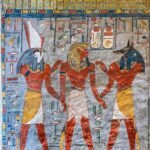
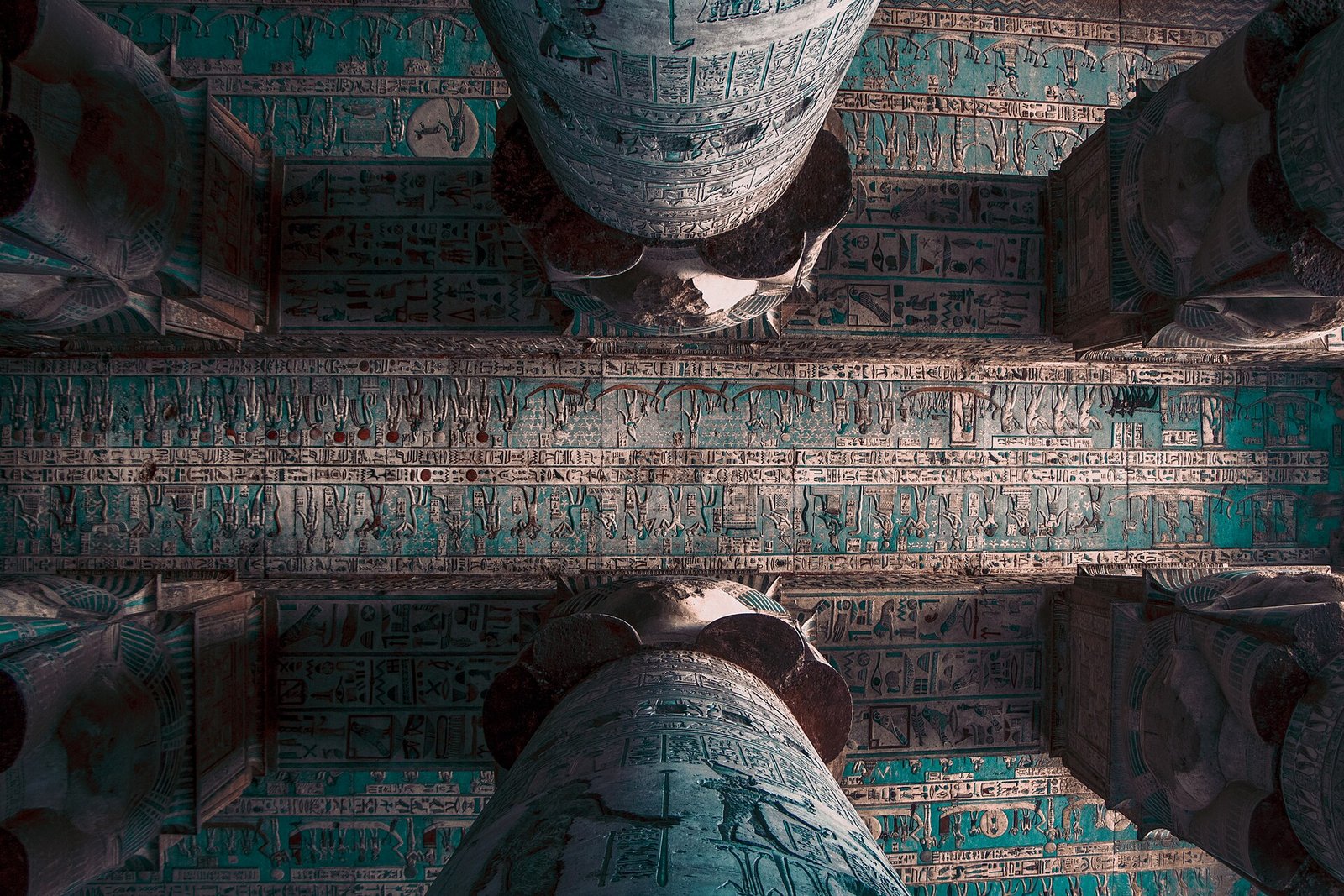
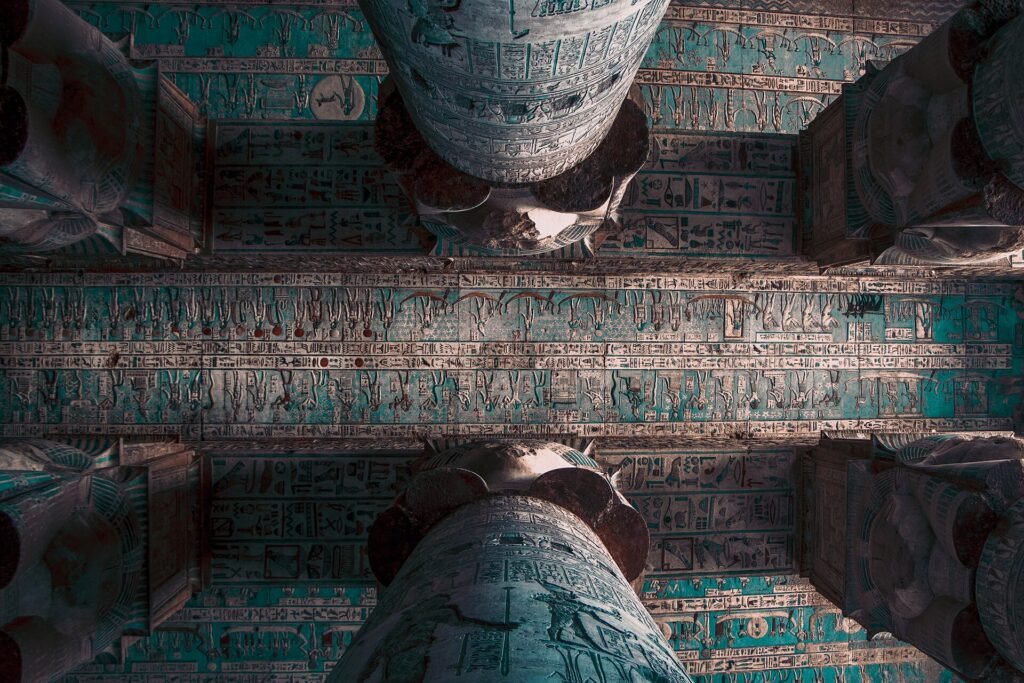
Abydos, about two and a half hours north of Luxor by road, holds the temple of Seti I, whose raised reliefs are the finest carved anywhere in Egypt and still carry much of their original color. Behind it is the Osireion, a half-sunken hall that feels older than everything around it. On the way back you stop at Dendera, the temple of Hathor, with a cleaned ceiling that glows in blues and golds, crypts, a rooftop chapel and the famous zodiac. Together they make one long, quiet day with a private car.
The Tombs of the Nobles and Deir el Medina
The Valley of the Kings shows how pharaohs prepared for eternity. The private tombs on the same hillside show how everyone else did, and they are more fun: fishing, banquets, harvests and hunting cats. Rekhmire, Sennefer with its grape-vine ceiling, Ramose and Menna are the ones a good guide steers you toward. Nearby, Deir el Medina is the village of the craftsmen who dug the royal tombs, and their own tombs, Sennedjem above all, are tiny, brilliantly painted and intact. Add Medinet Habu for a second full west bank day. Our Luxor excursions page lists these as separate half days.
Middle Egypt: Minya, Beni Hasan, Tell el Amarna and Tuna el Gebel
Minya, roughly four hours south of Cairo by road, anchors the least visited great sites in the country. Beni Hasan is a row of Middle Kingdom tombs cut high into the east bank cliff, with wrestling scenes, weaving and a view down the whole valley. Tell el Amarna is the city Akhenaten built from nothing and abandoned within a generation; the northern tombs and the royal tomb in its dry wadi are haunting because almost nothing stands. Tuna el Gebel adds the tomb of Petosiris and catacombs of mummified ibises. Give it two nights and a driver who knows the ferries and checkpoints.
Alexandria and the delta
Alexandria is a different country from Upper Egypt: Mediterranean light, seafood on the corniche and a Greco-Roman past under every street. The catacombs of Kom el Shoqafa, the Roman theater at Kom el Dikka, the fort of Qaitbay on the site of the ancient lighthouse and the modern Bibliotheca fill two days without hurry. From there you can push into the delta: Rosetta with its Ottoman merchant houses and the ruin field of Tanis with its royal tombs and toppled colossi. The train from Cairo takes under three hours; a private car lets you add the delta stops.
The Western Desert: Bahariya, the White Desert and Siwa
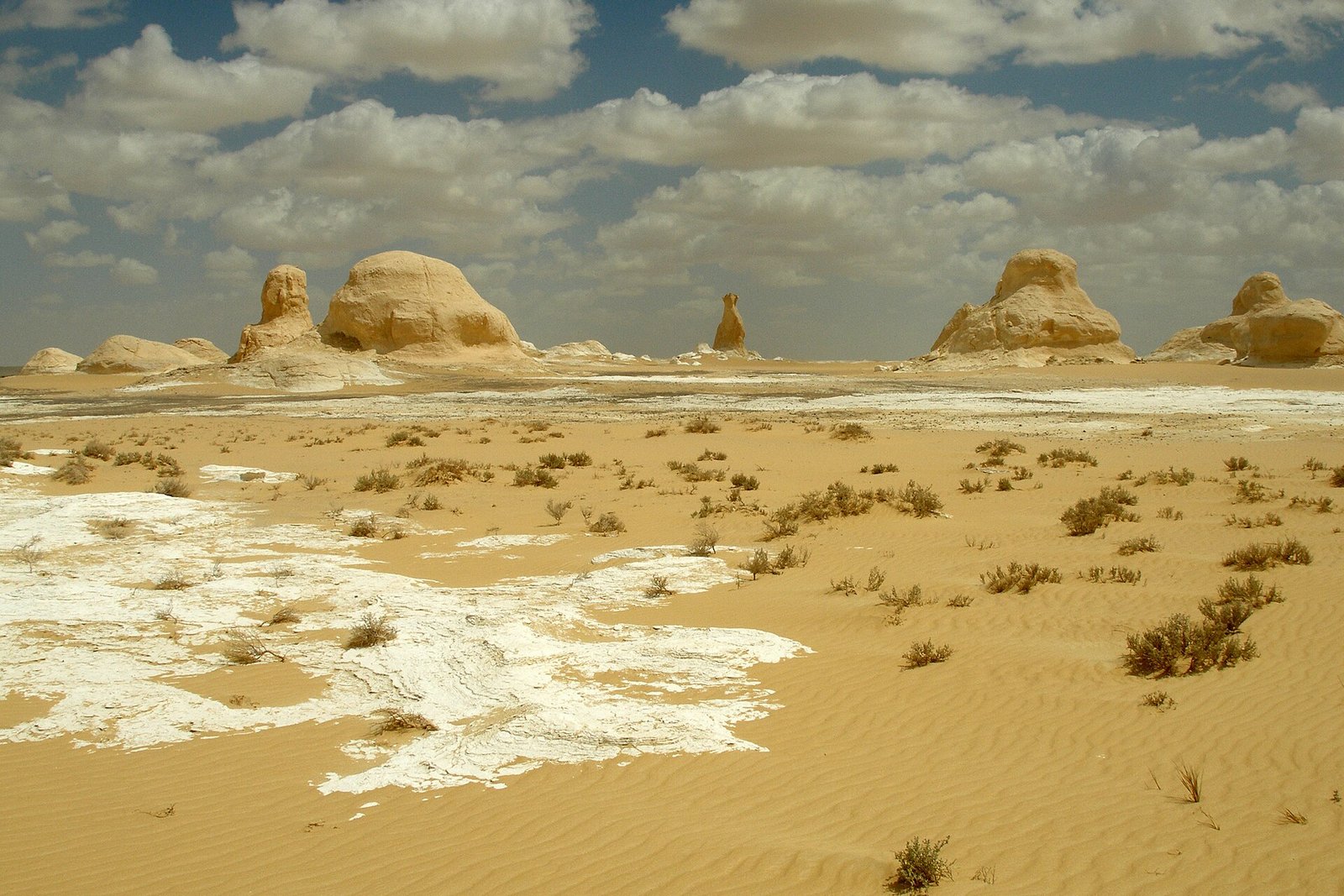
Bahariya oasis, four to five hours from Cairo, is the base for the Black Desert, Crystal Mountain and above all the White Desert, where wind has carved chalk into mushrooms and sphinxes and you sleep in a Bedouin camp under a sky with no light pollution for a hundred miles. Winter nights drop toward 4 C (about 40 F). Siwa, far to the northwest, is a separate world: the mud fortress of Shali, the oracle temple Alexander came to consult, springs, salt lakes you float in, and the Great Sand Sea beyond. It is a long drive from anywhere, so most people give it three nights.
The Fayum: Wadi El Rayan and Wadi El Hitan
The Fayum is a depression southwest of Cairo, watered by a branch of the Nile, and it works as a long day or an easy overnight. Wadi El Rayan has two lakes joined by Egypt's only waterfalls, with real dunes around them. Wadi El Hitan, the Valley of the Whales, is a UNESCO site where dozens of fossil whale skeletons lie on the desert floor where they died when this was a shallow sea; the walk between them is one of the most memorable hours in the country. Add the pottery village of Tunis on Lake Qarun for a rounded day.
Lake Nasser by boat
The alternative to a rushed Abu Simbel day trip is a three or four night cruise on Lake Nasser between Aswan and Abu Simbel on boats that carry far fewer people than the Nile ships. The route calls at temples rescued from the rising water and rebuilt on new shores: Kalabsha, Wadi el Seboua, Amada and the fortress of Qasr Ibrim. You arrive at Abu Simbel by water, moor overnight and walk to the temples at dawn before the buses.
Sinai beyond the resorts
Sharm el Sheikh is what most first-timers see of Sinai. The second time, drive inland. The monastery of St Catherine has been working at the foot of the mountain for fifteen centuries, and the night climb to the summit is covered step by step in our Mount Sinai sunrise guide. From there the road drops to Dahab, a low-rise diving town with the Blue Hole, shore reefs you walk into from the beach and Bedouin camps up the coast. The whole peninsula is in our Sinai peninsula travel guide, and Dahab has its own page.
A dahabiya instead of a big ship
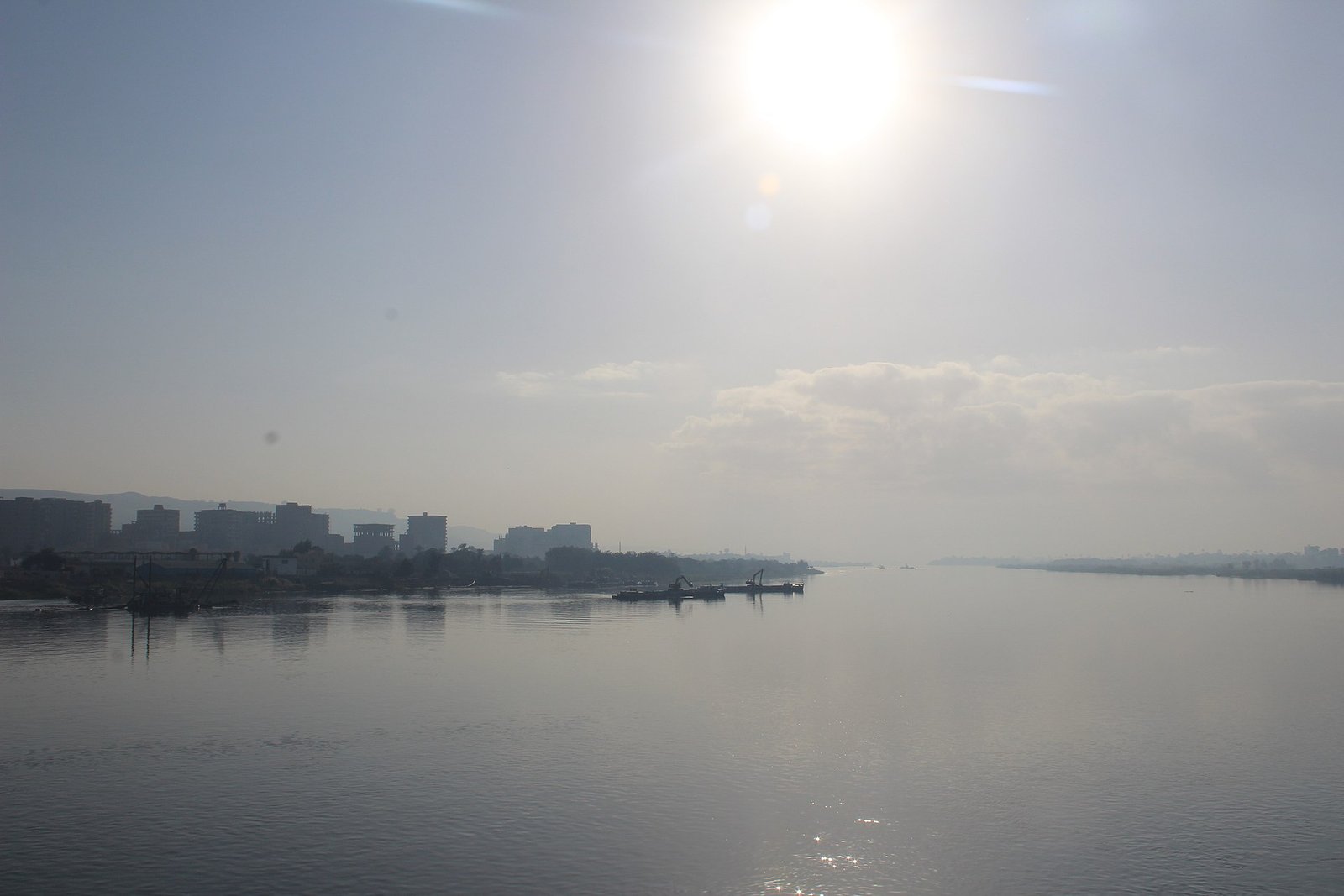
If you liked the Nile but not the ship, the second trip is when you switch to a dahabiya: a sailing boat with a handful of cabins, no engine noise, and moorings the big ships cannot reach. You still see Edfu and Kom Ombo, but you also stop at the quarries of Gebel el Silsila and a sandbank for lunch. Our dahabiya Nile cruise page explains how the boats work and how the routing differs.
Second-trip regions at a glance
What each region adds, the days it needs, and the base to reach it from.
| Region | What it adds | Days | From where |
|---|---|---|---|
| Abydos and Dendera | The best-preserved painted temples in Egypt, almost no crowds | 1 | Luxor, by private car |
| Tombs of the Nobles and Deir el Medina | Daily life painted in private tombs, the workers' village | 1 | Luxor west bank |
| Middle Egypt (Minya) | Beni Hasan, Amarna, Tuna el Gebel, the least visited major sites | 2 to 3 | Cairo, by road or train |
| Alexandria and the delta | Greco-Roman city, the sea, Rosetta and Tanis | 2 to 3 | Cairo, by road or train |
| Bahariya and the White Desert | Chalk formations, desert camping, the night sky | 2 to 3 | Cairo, by 4x4 |
| Siwa | Remote oasis, oracle temple, salt lakes, Great Sand Sea | 3 | Cairo via Marsa Matruh, or the desert track from Bahariya |
| The Fayum | Wadi El Rayan, Wadi El Hitan whale fossils, Tunis village | 1 to 2 | Cairo, by private car |
| Lake Nasser | Rescued Nubian temples and Abu Simbel by water | 4 to 5 | Aswan, by cruise boat |
| Sinai interior and Dahab | St Catherine, the Mount Sinai climb, shore reefs, Bedouin coast | 3 to 4 | Sharm el Sheikh, by road |
| Dahabiya | The same Nile, slowly and in silence | 5 to 7 | Esna or Aswan |
Three sample second-trip itineraries
The three shapes we build most often for returning travelers, none of which repeats the classic circuit. If you are still deciding how long to come for, our page on how many days you need in Egypt covers the trade-offs.
10 days: Middle Egypt plus deep Luxor
- Cairo. Arrive and spend the afternoon in Coptic Cairo, which the first trip usually skims.
- Drive south to Minya, stopping at Meidum and Dahshur if you missed them. Check in on the river.
- Beni Hasan in the morning light, then Tuna el Gebel and Hermopolis.
- Tell el Amarna: the northern tombs, a boundary stela, the royal tomb and the empty plain.
- Drive on to Luxor via Abydos, the longest day, with the temple of Seti I at the halfway point.
- Dendera in the morning, then Karnak's quieter corners: the open-air museum and the temple of Khonsu.
- West bank, day one: Tombs of the Nobles and the Ramesseum.
- West bank, day two: Deir el Medina, Medinet Habu, the Valley of the Queens and the tomb of Nefertari if it is open.
- Free morning, then a domestic flight back to Cairo.
- Departure day.
10 days: desert loop
- Cairo. Arrive and rest, with an evening in Zamalek or on the corniche.
- Drive to Bahariya. Hot springs and the view from the English Mountain.
- Black Desert, Crystal Mountain and Agabat, then camp in the White Desert.
- Sunrise among the chalk shapes, return to Bahariya and rest.
- The desert track to Siwa with a licensed 4x4 and permits arranged ahead.
- Siwa: Shali fortress, the oracle temple of Amun, Cleopatra's spring, the salt lakes at sunset.
- Great Sand Sea by 4x4: dunes, a cold lake in the sand and a fossil field.
- Slow morning, then drive to Marsa Matruh on the Mediterranean.
- Along the coast to Alexandria. Seafood dinner on the corniche.
- Alexandria highlights in the morning, then the road back to Cairo for departure.
8 days: Alexandria, the Fayum and unseen Cairo
- Cairo. Arrive and walk Al Muizz Street with the mosques lit.
- Unseen Cairo, day one: Ibn Tulun, the Gayer-Anderson house, the Citadel and the City of the Dead with a guide.
- Unseen Cairo, day two: Saqqara's newer tombs and the Serapeum, then Dahshur.
- The Fayum: Wadi El Hitan, Wadi El Rayan, overnight in a lodge at Tunis village.
- Lake Qarun at dawn, the pottery workshops, Hawara pyramid, back to Cairo.
- Train or private car to Alexandria. Catacombs, Kom el Dikka and the corniche at dusk.
- Qaitbay, the Bibliotheca, Montaza gardens and a fish dinner in Anfushi.
- Return to Cairo via Rosetta or the Wadi El Natrun monasteries, then departure.
All three can be shortened or combined.
How the pace differs from the first trip
The first trip is a sprint: fixed cruise timings, a bus that leaves at seven, five sites a day and a guide talking to thirty people at once.
The second trip is the opposite. The distances are longer, the sites are emptier, and the day is built around one or two places rather than five. In Minya you may be the only visitors at Beni Hasan all morning. On a dahabiya the boat moves at the speed of the wind.
- You need a private vehicle for almost everything. Tour buses do not serve the distances between second-trip sites.
- Hotels are smaller and simpler outside the main circuit, comfortable but not five star, and the trade is worth it.
- Seasons matter more. The desert and Middle Egypt are best from October to April; midsummer afternoons in Minya pass 40 C (104 F).
If it has been a few years since your first visit, skim our Egypt travel guide for what has changed in Cairo and on the Nile before you plan the return.
Why a private guide matters more the second time
On the first trip a group guide is fine. On the second the equation flips, for four reasons.
Access. The desert track to Siwa and the rural roads of Middle Egypt involve permits and checkpoints that a local operator handles as routine and a visitor cannot handle at all. Tombs on the west bank open and close on rotation, and a guide who is there every week knows which ones are open this month.
Depth. You already know the outline of Egyptian history, so the guide can stop reciting it and start pointing: why Seti's reliefs at Abydos look different from his son's at Karnak, why Akhenaten's tombs show the royal family at dinner. That conversation only happens one to one.
Logistics. A second-trip itinerary strings together places hours apart, with ferries, desert tracks and a domestic flight or two. Our own drivers and vehicles make connections that would otherwise eat a day each.
Pace. A private guide adjusts to you. Two hours in one tomb and none in the next is the plan if you want it.
Explora Egipto is a local agency with its own guides and vehicles across the country, including Minya, Bahariya, Siwa and Sinai, so the itineraries above are trips we run ourselves. Tell us what your first trip covered and we will plan around it.
Frequently asked questions
Is Egypt worth visiting a second time?
Yes, and for many travelers the second trip is the better one. The first visit covers the headline circuit of Giza, Cairo, Luxor, the Nile cruise and Aswan. The second reaches Abydos, Dendera, Middle Egypt, the Western Desert, Alexandria, the Fayum, Lake Nasser and inland Sinai, with fewer crowds and a slower pace. You arrive already knowing the history, so everything you see lands harder.
How many days should a second trip to Egypt be?
Eight to twelve days covers one region properly. Ten days is the sweet spot for either Middle Egypt with deep Luxor or the desert loop through Bahariya, the White Desert and Siwa. Eight days is enough for Alexandria, the Fayum and the parts of Cairo you skipped. For two regions, plan on sixteen to eighteen days.
Should I repeat the Nile cruise on a second visit?
Not on the same kind of ship. If you loved the river, switch to a dahabiya, a sailing boat with a handful of cabins that stops at islands, quarries and villages the big ships cannot reach. If you want something completely new, take a cruise on Lake Nasser instead, which visits the rescued Nubian temples and arrives at Abu Simbel by water at dawn. Both feel nothing like the first cruise.
Is Middle Egypt safe and easy to visit?
Minya, Beni Hasan, Amarna and Tuna el Gebel are visited every week by travelers with a licensed guide and driver, and that is the way to do it. The sites are spread out, there are ferry crossings and checkpoints, and a local operator handles the paperwork. Go with a private itinerary, give it two nights, and it is one of the most rewarding stretches of the country.
What is the best season for the Western Desert and Siwa?
October to April. Days are warm and clear, and nights in the White Desert can fall to around 4 C (40 F), so the camps provide heavy blankets. From May to September the daytime heat makes the long drives and the dune trips hard work, and some desert camps close. Siwa in late fall, after the date harvest, is the version most people fall for.
Can I combine Sinai with the rest of a second trip?
Yes, but treat it as its own block of three to four days at the start or end. Fly from Cairo to Sharm el Sheikh, drive to St Catherine for the monastery and the sunrise climb, then down to Dahab for the reefs and the Bedouin coast, and fly back. It combines well with deep Luxor or with Alexandria and the Fayum, and poorly with the Western Desert, which is a long drive the other way.
Tell us what you saw the first time
Send us the sites your first trip covered, the days you have and the region that appeals most, and we will send you a quote for a second-visit itinerary built around what you have not seen yet, with our own guide and driver throughout.